


Voices of INCREASE
The project’s success is owed entirely to its people. The strong collaboration of project partners, stakeholders and citizens lead not only to strong results, but also a community that has the potential to persist beyond the end of the project. Let’s hear what some of those have to say, who helped turn the INCREASE project into a powerful example of collaborative agrobiodiversity protection.
Citizen scientists
“I felt excitement every time a new leaf, a new root, a flower, or fruit appeared. I was most looking forward to tasting my experiment and I learnt How to grow bean seeds and how simple it is to prepare nutritious dishes from this vegetable.”
Sylwia, Poland
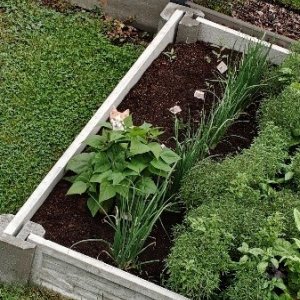
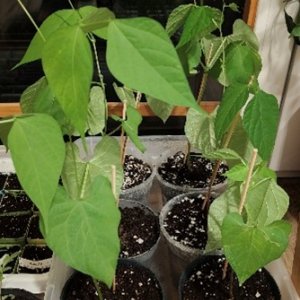
“What inspired me to take part in the Citizen Science Experiment was the idea of allowing lots of people to get involved in a project in a straightforward way. And the idea of preserving diversity is fantastic. I learnt about the variety of garden beans and how to prepare them. In the past, there were only ‘boring’ green snap beans. Now there is a colourful variety. I very much enjoyed connecting with bean lovers from different countries.”
Heide, Germany


“I joined the project for two reasons. Firstly, the issue of protecting crop biodiversity has always been close to my heart, so as soon as I heard about the project, I was certain I wanted to get involved. The second reason was the opportunity to take part in a genuine citizen science project. I believe that INCREASE will serve as an inspiration and a model for future citizen science projects!
During the experiment, I learnt above all patience (with a good dose of consistency). Observing various characteristics in parallel across varieties that were so diverse, even in terms of earliness, was a truly demanding logistical task. Another thing I learnt was how to deal with setbacks. The weather, pests and diseases, or simply a variety being unsuited to the climatic conditions, really took their toll. But well, in science, failures are just data like any other. For science!
My main driving force behind this madness was definitely excitement! What seeds would I find in the parcel I received? Would the varieties I received thrive in my garden? Why does this bush look different from its twin? What are the pollinators up to here? I wonder what the harvest will be like this year? What varieties will I manage to track down during the swap? Will my wife forgive the plague of bean weevils in the house?”
Marcin, Poland

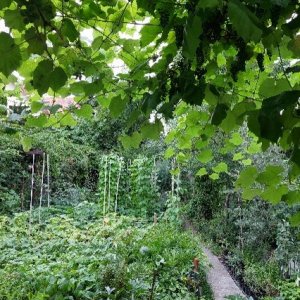
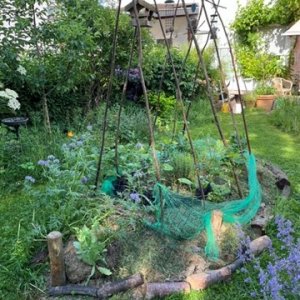
In the meantime, I’ve also managed to get several of my friends interested in growing different varieties, and we’re all eating far more beans than we used to. What’s more, I’m now connected with other bean lovers, for example via Facebook. So I can say that beans make up a good part of my summer in the garden and that the project has had a very positive impact on my life.
Birgit, Germany
Stakeholders
“Participation to the INCREASE events as stakeholder allowed us to keep up with the recent developments in the field of breeding and genetic material of chickpea and other protein crops. Efforts to conserve genetic material in protein crops are highly important in the current context.
INCREASE allowed ILVO to use a broad collection of genetic material, which helped us substantially to start our chickpea breeding programme. ILVO initiated breeding activities in chickpea in 2022, using European cultivars, gene bank material and 200 accessions from the INCREASE chickpea accession set as starting material. INCREASE material was included in 11/16 of our initial cross combinations. At this point, we are screening advanced lines, and we expect to be able to release the first cultivars bred for NW European conditions in the next 5 years. Without INCREASE, we would have had a smaller collection of genetic material to start with.
It is highly important that efforts are undertaken to maintain genetic diversity in protein crops. INCREASE aims at increasing in situ conservation and use of genetic material. We expect that breeders, growers and gardeners will continue using and sharing the material after the end of the INCREASE project.”
Tim Vleugels and Aurélie Tredé Researchers in plant breeding ILVO - Flanders Research Institute for Agriculture, Fisheries and Food Belgium


Project team
About the challenges and opportunities of lentils
“As a crop leader within INCREASE, I see lentil as a crop with strong untapped potential, but also a number of clear limitations that still need to be addressed.On the challenge side, lentil is highly sensitive to heat and terminal drought during the reproductive stage, which has a strong impact on yield stability. In many breeding programmes, progress is also limited by the narrow genetic base currently in use, despite the large diversity conserved in gene banks. On top of that, there are agronomic constraints such as weak competitiveness with weeds, which can limit its wider adoption in some systems.
At the same time, the opportunities are very significant. Lentil is a low-input, climate-smart crop that improves soil fertility through nitrogen fixation and fits well into more sustainable rotations. It is also highly relevant for nutritional security, given its protein and micronutrient content. Importantly, there is still a large amount of untapped genetic diversity, especially in landraces, that can be used to improve resilience and adaptation.
Overall, the main opportunity is really about closing the gap between this existing diversity and its effective use in breeding, so lentil can play a stronger role in future resilient farming systems.”
The role of INCREASE
“INCREASE is helping to unlock the potential of lentil mainly by changing how we work with genetic resources. A key step has been the development of the lentil INCREASE intelligent collections, which allow us to capture and use genetic diversity in a much more structured and efficient way. By combining high-density genotyping with multi-environment phenotyping, we can start linking genetic variation to important traits in a more robust way. Another important aspect is the project’s emphasis on open data and collaboration, which really accelerates progress across teams and countries. And the participatory approach is also valuable, because it allows us to evaluate material under real growing conditions and across a wide range of environments."Personal motivation and hopes for the future
“What motivates me personally to work on lentil is its unique combination of agronomic, environmental and nutritional value, together with the fact that it is still relatively underexploited in modern breeding despite its importance for sustainable agriculture. In the long term, I hope my work contributes to the development of more resilient and stable lentil varieties and to help better connect genetic resources with breeding, so lentil can play a stronger role in sustainable agriculture and food systems.”Personal highlights
“One of my personal highlights of the INCREASE project has been working directly with the extensive genetic diversity in lentil and realising how much of it remains underutilised in breeding. It has been especially rewarding to see how the combination of genotypic information and multi-environment phenotyping can transform this diversity into actionable knowledge for trait improvement. Just as important has been the strong multidisciplinary and international collaboration within INCREASE, bringing together experts in genetics, breeding, phenotyping and data analysis across multiple countries. This environment has made it possible to address complex breeding challenges in a more integrated and effective way. Overall, one of the most rewarding aspects has been seeing how the project turns conserved diversity into tangible opportunities for developing more resilient and sustainable lentil varieties."Dr Tania Gioia
Università degli Studi della Basilicata
INCREASE Crop Leader Lentil

Main goals of the work and contribution to the overall project vision
“WP5 focused on advancing knowledge of genetic resources in food legumes, with particular emphasis on gene discovery and genomic prediction. By exploring genetic diversity and identifying key genes associated with important agronomic traits, we aimed to unlock the potential of germplasm for crop improvement across diverse environments, thereby supporting pre-breeding efforts. A key achievement was the improved understanding of genotype × environment interactions, enabling more accurate prediction of plant performance from genomic data and facilitating the use of previously uncharacterised germplasm. Ultimately, this work supports the identification of suitable germplasm for a wide range of stakeholders, targeting traits relevant to adaptation, cultural practices, and consumer preferences in European agro-ecosystems.”Most valuable insights or achievements
“The most valuable insights include the publication of new genomic resources for the community, notably the pan-genome of common bean and that of L. mutabilis, an underutilised crop with strong future potential. Significant progress was also made in the characterisation of locally adapted varieties and their genetic determinants, such as high-altitude-adapted lentils in Italy. In addition, detailed analyses of the molecular determinants of metabolic composition, along with downstream functional validation, have proven essential for understanding nutritional value, as demonstrated in chickpea. Work on molecular responses to water deficit in common bean highlighted the role of nitrogen fixation in tolerance to drought conditions. Finally, the development of statistical tools applicable across crops to investigate the extent and genetic basis of genotype × environment interactions provides a valuable roadmap for future studies in diverse species.”Collaboration within INCREASE and future hopes
“Work Package 5 was strongly dependent on Work Package 4 for data production and functioned as a downstream work package. As is often the case in such projects, downstream activities tend to experience delays, and not all analyses have yet been completed. However, the data is now available and collaborations will continue beyond the project. One of the most exciting perspectives is that, thanks to the INCREASE project, we have reached an unprecedented level of knowledge on legumes. This will now support breeding efforts for these crops, which have long been neglected in plant improvement programmes. Yet, legumes have a crucial role to play in the agroecological transition, whether grown as sole crops or in association with other species.”Personal highlights
“The INCREASE project created a strong bridge between basic research, applied science and societal needs. It was designed to deliver concrete solutions for gene banks in the conservation and evaluation of genetic resources, to provide open-access information for farmers and breeders, and to address growing consumer demand for legumes in Europe. While it has successfully met these applied objectives, the project also advanced fundamental scientific questions. In this way, INCREASE combined scientific ambition with impact, tackling challenging research questions while responding to clear expectations from stakeholders and consumers.”Dr Maud Tenaillon
Research Director
Centre National de la Recherche Scientifique CNRS
Leader of Work Package 5 (Data analysis and knowledge exploitation)
About the challenges and opportunities of lupins
“Lupin is a highly promising but still underutilised crop. The main challenges for its wider adoption are related to the limited availability of well-characterised germplasm and a relatively small number of improved varieties. It is important to realise that every crop has its own specific challenges. In the case of lupin, alkaloid content is one of the constraints, just as other legume crops face their own limitations. Another challenge is the limited development of value chains and the relatively low market presence of lupin-based products, which makes it difficult to introduce lupin more broadly as a food legume. At the same time, lupin offers significant opportunities. It has a very high protein content in seeds, one of the highest among legumes. Its rich genetic diversity, combined with potential for improved taste and nutritional quality, as well as strong adaptability to different environments, make it a promising candidate for future sustainable and climate-resilient food systems.”The role of INCREASE
„The INCREASE project has played an important role in uncovering the biodiversity of both European and Andean lupins and making this diversity more accessible for research and breeding. And also, develop material ready to use. It has also significantly increased awareness of lupin among scientists, breeders and stakeholders. Importantly, through the Citizen Science Experiment, the project has reached a wider audience, engaging non-scientists and raising interest in lupin cultivation. And in parallel in some cases, participants became also directly interested in growing lupins and requested seeds, which shows the strong outreach potential of the project.“Personal motivation and hopes for the future
“From a basic science perspective, I am interested in understanding the evolution and domestication of lupins, as well as the structure and evolution of their genomes. It is a very fascinating group of plants. From an applied perspective, I find it surprising that such a high-protein crop is still so underutilised in human nutrition. I believe that lupins, alongside other legumes such as common bean, chickpea and lentil, should play a much greater role in our diets. I hope that the work initiated within INCREASE will continue to expand knowledge, data availability, and interest in lupins, supporting their further development and wider use in sustainable food systems.”Personal highlights
„The INCREASE project has been one of the most rewarding projects I have been involved in. It has been a valuable experience to work towards ambitious goals that initially seemed difficult to achieve, and to see that, through strong collaboration and commitment, these goals can be realised. I have particularly appreciated being part of a highly motivated and supportive team working towards high-impact outcomes in the field of genetic resources. The project has significantly contributed to my professional development. One of my personal highlights has been the opportunity to work directly with diverse stakeholders, from researchers to local communities, and to see how citizen science can connect science with society in a very practical and meaningful way. Importantly, the project has also built a unique, open, and engaged community, bringing legumes closer to research institutions, citizens, and ultimately to our everyday diets. I am proud to have contributed to this.“Dr Karolina Susek
Institute of Plant Genetics, Polish Academy of Sciences
INCREASE Crop Leader Lupin
Main goals of the work and contribution to the overall project vision
"As leader of Work Package 6 “Germplasm Management”, our main goal was to transform the knowledge generated across the entire INCREASE project into practical, sustainable solutions for the conservation and use of plant genetic resources. We focused on improving management standards for food legume genetic resources, developing harmonised conservation strategies, and testing innovative approaches that connect ex situ genebank conservation with on-farm and participatory conservation approaches. A central objective was to make genetic resources more accessible and useful for breeders, farmers, researchers, and society as a whole. This included developing guidelines for dynamic germplasm management, improving traceability and data sharing, supporting digitalised seed exchange systems such as smart-contract based SMTAs, and most importantly, implementing the Citizen Science Experiment (CSE) as a fully decentralised conservation and evaluation strategy. The work strongly contributed to the overall INCREASE vision because the project was never only about conserving seeds. It was about activating agrobiodiversity. By involving stakeholders and citizens directly, we helped move genetic resources from genebanks into society, creating awareness, engagement, and real participation in conservation. This participatory approach was one of the most innovative and impactful dimensions of INCREASE."Most valuable insights or achievements
"Without any doubt, the most valuable achievement has been the successful implementation of the Citizen Science Experiment. The CSE showed that citizens are not just passive recipients of scientific knowledge, they can become active contributors to research, conservation, and awareness building. Through the distribution and evaluation of common bean genetic resources across Europe, we created a completely new way of connecting people with agrobiodiversity. Schools, home gardeners, community and urban gardens, farmers, and many other participants became directly involved in preserving and observing crop diversity. Scientifically, this validated the concept of decentralised conservation strategies and mostly, we demonstrated that citizen-generated data and seed stewardship can meaningfully complement classical scientific data generation and genebank conservation. But beyond the scientific outcome, the real achievement was building a living community around agrobiodiversity. The CSE created ownership, enthusiasm, and trust. It made biodiversity tangible and personal for people. That is something no database alone can achieve."Collaboration within INCREASE and future hopes
"The collaboration within INCREASE has been exceptional, and it is probably one of the strongest reasons why our work became so successful. The entire consortium participated actively in supporting the Citizen Science Experiment, and the engagement from both project partners and external stakeholders was remarkable. Everyone contributed, not because they had to, but because they genuinely believed in the idea. This created a real community feeling, almost like a family, built on trust, openness, and shared purpose. The Stakeholder Consortium was equally important. Their commitment helped us amplify dissemination, strengthen outreach, and connect science with real-world users and needs. This level of collaboration gave our work much greater impact than it could ever have achieved alone. What excites me most for the future is that this community will clearly continue beyond the official end of the project. The trust we built, the networks we created, and the shared motivation around agrobiodiversity will not stop with the project lifetime. I am convinced that the legacy of the CSE and the collaborative spirit of INCREASE will continue to grow and inspire future initiatives."Personal highlights
"My personal highlight has been discovering citizen science and learning how to communicate science beyond the scientific community. As researchers, we work mainly with other scientists, but INCREASE gave me the opportunity to engage directly with citizens, schools, gardeners, farmers, and people from many completely different backgrounds across Europe. Learning how to explain complex topics like agrobiodiversity in a meaningful and accessible way was a major personal and professional enrichment for me. What made this especially rewarding was seeing that we were truly making an impact. Whether people first learned about agrobiodiversity through media coverage or by actively participating in the Citizen Science Experiment, we succeeded in bringing this important topic into society. The involvement of schools was particularly meaningful to me. I strongly believe that educating younger generations is essential for the future of agriculture, food systems, and sustainable consumption. These young people are our future consumers, farmers, scientists, and decision-makers. Personally, it was an incredibly enjoyable experience to speak with so many different people across Europe, all coming together under the umbrella of the CSE with very different motivations and expectations. I learned a tremendous amount over these years, and I am truly looking forward to continuing this journey beyond the lifetime of INCREASE."Dr Kerstin Neumann
Group Leader Automated Plant Phenotyping
Leibniz-Institut für Pflanzengenetik und Kulturpflanzenforschung
Leader of Work Package 6 (Germplasm Management) and Coordinator of the INCREASE Citizen Science Experiment
Main goals of the work and contribution to the overall project vision
"As leader of Work Package 2, I designed and steered INCREASE’s digital backbone. Our aims were to uniquely identify and trace all genetic resources through DOIs (Digital Object Identifier), to codify clear, crop specific trait definitions using shared ontologies so partners measured the same things in the same way, and to deliver a FAIR-by-design, versioned data platform that unifies passport, phenotypic, genotypic and environmental data and feeds analysis results back to users. We complemented this with practical templates, active data acquisition and curation, and hands on training to raise data quality across sites. We supported decentralised conservation pragmatically by enabling secure, auditable exchange of materials and straightforward reporting of observations from citizen science activities into the core system.In line with the project vision, we operationalised FAIR and open science principles day to day. By improving findability, comparability and traceability, we connected gene banks, researchers, breeders and citizen scientists and tightened feedback loops from raw measurement to reusable knowledge. This made coordinated phenotyping in Work Packages 3 and 4 more consistent, powered robust analyses and predictive models in Work Package 5, and broadened real world testing in Work Package 6. In short, our work underpinned the creation of Intelligent Collections and accelerated the responsible, sustainable use of legume diversity in pre-breeding and practice."
Most valuable insights or achievements
The most valuable insights and achievements have been that we established the central data and information management as a robust IT backbone, thereby ensuring that data generated in work streams, together with relevant external reference data, can be consistently consolidated, curated and stored in a traceable manner for the long term. A key achievement is the unambiguous and sustainable identification of the genetic resources used in the project via DOIs. To this end, the FAO GLIS service was integrated into the data-management workflow and a protocol was put in place to ensure that all relevant SSD lines of the R-CORE receive a DOI, or - where lines are newly developed from heterogeneous material - that a new DOI is issued, so that material and datasets remain uniquely citable and traceable across all steps. Equally important was the project-wide harmonisation of phenotypic traits and associated rating scales: standards were defined and aligned across the data-generating domains to ensure that phenotypic data is comparable and directly integrable across sites and partners. These standards were implemented in the central data infrastructure and translated into practice through templates, validation rules, active data acquisition, central curation, as well as partner trainings and webinars. A visible core output has been the web portal as the primary access and user front end, which makes the passport, phenotypic and genotypic data collected in the project findable, searchable and usable for research and breeding, including appropriate visualisations, dedicated functionalities and standardised exchange formats/interfaces to ensure interoperability with established systems. Overall, we have delivered an end-to-end chain from standardisation and data-quality assurance through integration and provision, enabling downstream analysis and exploitation of the INCREASE data."Collaboration within INCREASE and future hopes
"Collaboration within INCREASE has been exceptional and is a key reason why our work has achieved strong impact. The consortium’s active, voluntary engagement made it possible to agree on shared standards (e.g. traits and rating scales), implement workable DOI and data curation workflows, and build infrastructure that partners actually use. Close exchange with Work Package 6 leading the Citizen Science Experiment also helped ensure our standards and that the web portal can handle real-world data flows and user needs. The Stakeholder Consortium further increased impact through dissemination, outreach and practical feedback. What excites me most is the hope that the valuable data and resources brought together in INCREASE will continue to be used, and that the project’s spirit will live on through the continuation of the Citizen Science Experiment."Personal highlights
"My personal highlight of the INCREASE project has been the consistently positive and constructive collaboration across the consortium. The enthusiasm of the project partners was genuinely tangible, and it was impressive to see how much commitment everyone brought to their tasks. It also gave me a strong appreciation of the contributions across all areas - from demanding field work and careful phenotyping through to rigorous data curation and integration -showing how the project’s success relied on many different kinds of expertise working together."Markus Oppermann
Senior Scientist
Leibniz-Institut für Pflanzengenetik und Kulturpflanzenforschung
Leader of Work Package 2 (Database establishment and data integration)
