

Intelligent collections
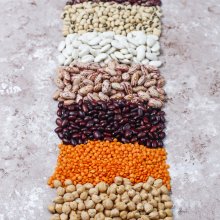
One of the main achievements of the INCREASE project has been the development of the Intelligent Collections for common bean, chickpea, lentil and lupin.
These collections are carefully selected subsets of genetic resources that represent the natural diversity stored in gene banks. Instead of working with thousands of accessions, researchers and breeders can now use well-structured “core” sets (T-CORE and R-CORE) that capture this diversity in a manageable and scientifically informed way.
What makes them “intelligent” is that they are not just seed collections. They are supported by detailed phenotypic and genomic data, making them much easier to use for research and breeding.
- From Seeds to Knowledge
The Intelligent Collections combine:
- Representative genetic diversity for each species
- Phenotypic data collected in the field and under controlled conditions
- Genomic information, including sequencing data
- Harmonised phenotyping protocols
The material has been tested in many different environments across Europe, including multi-location field trials and controlled experiments. Traits studied include:
- Protein content
- Root architecture
- Drought tolerance
- Chilling tolerance
- Adaptation to alkaline and heavy soils
Large numbers of T-CORE lines have already been multiplied, shared and evaluated. For example:
- 200 chickpea lines were multiplied by seed companies and evaluated in field trials.
- 101 lentil lines and 106 common bean lines were selected and advanced to field testing.
- 220 lentil lines were analysed for root architecture.
- 398 lines were evaluated for chilling tolerance.
- 200 lines were screened for protein content for genetic analyses.
The Intelligent Collections material has also been used to develop new breeding populations (RILs, composite crosses, MAGIC populations), supporting long-term crop improvement.
- Strong Collaboration and Broad Use
The Intelligent Collections are already being used by a wide range of stakeholders:
- Researchers and universities for genetic studies and trait analysis
- Breeders and seed companies for evaluation and seed multiplication
- Gene banks for conservation and structured management of diversity
- Agricultural research centres and international networks (e.g. EVA, EVA Boost)
- High schools and educational networks, which conducted replicated field trials
- Citizens and urban gardens, contributing to participatory approaches
This broad engagement shows that the Intelligent Collections are not only scientific resources but also tools for education, innovation and community involvement.
- Conservation and Long-Term Sustainability
Conservation has been an important part of the work. The collections are being maintained through long-term storage and active conservation strategies. The consortium is also exploring the possibility of depositing backup samples of the Intelligent Collections in the Svalbard Global Seed Vault, ensuring their long-term security.
- What We Learned
Developing Intelligent Collections required overcoming practical and scientific challenges, from seed multiplication to data harmonisation and large-scale coordination. The INCREASE consortium plans to share this experience in a scientific publication, reflecting on what worked well, what difficulties were encountered and how the process can be improved in future initiatives.
- Overall Impact
The Intelligent Collections turn traditional gene bank material into ready-to-use, well-characterised, and accessible resources. By combining genetic diversity, field testing, genomic data and collaboration with stakeholders, INCREASE has created a practical model for making plant genetic resources more useful for research, breeding and sustainable agriculture. In short, the Intelligent Collections help bridge the gap between conservation and real-world use, supporting more resilient and future-proof food systems.
Continuing its strong participatory approach beyond the project duration, the INCREASE consortium remains committed to maintaining the “Intelligent Collections” and ensuring continued access to them for use and testing under real-world conditions. Stakeholders interested in accessing and using INCREASE legume seed material are invited to complete a short request form.