


Citizen science and decentralised conservation take centre stage at INCREASE event in Brussels
Brussels, 20 April 2026 – The INCREASE project convened researchers, policymakers and stakeholders from across Europe for the event “Citizen Science and the Decentralised Conservation of Agrobiodiversity – From Experiment to Structural Innovation in Europe”, highlighting how participatory approaches can reshape the future of agrobiodiversity conservation.
The event marked a key milestone in translating the project’s results into forward-looking policy insights. Discussions ranged from strategic reflections on environmental knowledge production to concrete evidence generated by the INCREASE Citizen Science Experiment, demonstrating its scale, design, and policy relevance. The programme combined high-level perspectives with practical examples from across Europe, featuring contributions from researchers, EU representatives, and stakeholders directly involved in citizen science activities.
The programme opened with a strategic framing by INCREASE Coordinator Roberto Papa (Università Politecnica delle Marche), who positioned decentralised conservation as a structural pillar of European genetic resource governance, followed by a plenary lecture by Muki Haklay (University College London/Muséum National d’histoire naturelle) on the role of citizen science in transforming environmental governance. Further sessions explored the proof of concept behind the INCREASE Citizen Science Experiment, including presentations on its design, scale-up and participation across Europe, the role of the International Treaty on Plant Genetic Resources for Food and Agriculture, the integration of artificial intelligence, and the scientific and policy implications of citizens’ data. The programme also addressed the role of genebanks in ex-situ conservation, highlighting how decentralised conservation can serve as a powerful and necessary complement to these key institutions in safeguarding plant genetic resources.
A dedicated session, “INCREASE Stakeholder Consortium and Citizen Voices: Europe in Practice”, brought together representatives from across Europe to showcase concrete experiences in citizen science and decentralised conservation, highlighting activities carried out by stakeholder organisations, community gardens and research institutes in Belgium, Italy, Slovenia and Poland. The presentations demonstrated how local engagement and cross-sector collaboration are helping translate the INCREASE approach into practical actions that support the conservation and sustainable use of plant genetic resources across diverse regional contexts.
A central highlight was the policy panel on scaling decentralised conservation within European research and innovation (R&I) frameworks, bringing together representatives from the European Commission, academia, international organisations and the INCREASE consortium to discuss how EU R&I frameworks can further enable decentralised conservation approaches. Key messages emerging from the discussion underscored the growing importance of citizen science as a bridge between research and real-world application. Engaging younger generations was recognised as a powerful driver for knowledge valorisation and long-term societal impact. Panellists also emphasised that decentralised conservation extends beyond a scientific methodology: it represents a broader societal and policy innovation. Scaling such approaches across Europe will require sustained support, improved coordination mechanisms, and stronger institutional embedding within EU R&I systems.
The programme continued in the afternoon with a visit to the Meise Botanic Garden, where participants explored the garden’s collections and conservation activities.
The event “Citizen Science and the Decentralised Conservation of Agrobiodiversity – From Experiment to Structural Innovation in Europe” reaffirmed the INCREASE project’s contribution to advancing new models of participatory research, in which citizens actively generate data and support the conservation of plant genetic resources. By linking grassroots engagement with policy dialogue, INCREASE offers a blueprint for integrating citizen science into Europe’s agricultural and environmental strategies.
As the project concludes, its legacy points toward a future in which decentralised, citizen-driven approaches play a structural role in safeguarding agrobiodiversity and strengthening resilient food systems across Europe.
Image credits: Léna Prochnow (EURICE), Dirk Rahnenführer (Schweizer Familiengärtner-Verband SFGV)

REA Project Officer Izabela Freytag, Tamara Messer (EURICE), Roberto Papa (UNIVPM), Léna Prochnow (EURICE) (from left to right)

Panel discussion - here: Kerstin Neumann (IPK), Muki Haklay (University College London/Muséum National d’histoire naturelle), Léna Prochnow (EURICE), Roberto Papa (UNIVPM) (from left to right)
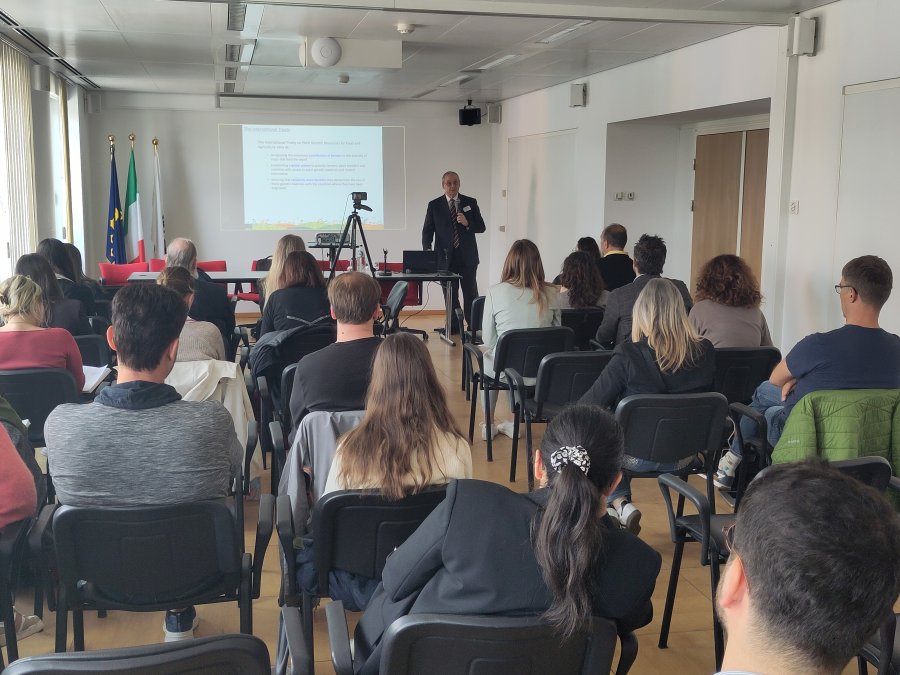
Presentation of Marco Marsella (Food and Agriculture Organization of the United Nations)
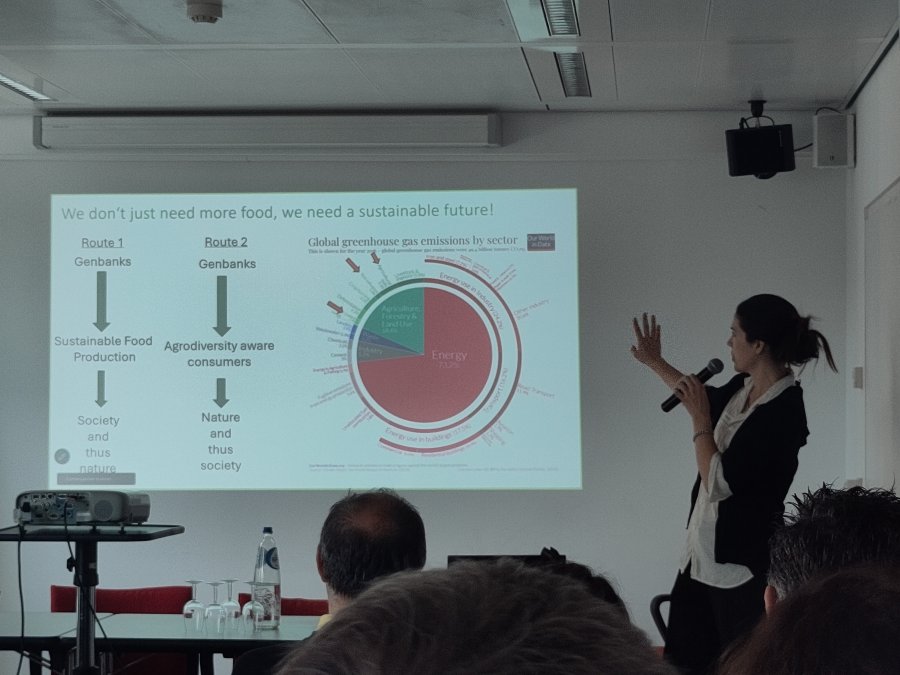
Presentation of Anna Backhaus (Leader of IPK genebank)

Visit to the Meise Botanic Garden - guided tour by Filip Vandelook, Director of Science at Meise Botanic Garden

Visit to the Meise Botanic Garden - group picture